Explore the
Living Universe
Real-time asteroid tracking, interactive solar system simulations, galaxy exploration, AI-powered cosmic insights, and the complete history of our universe — all in one place.
From Nothing to Now
Trace 13.8 billion years from the Big Bang to today
Solar System
Live orbital simulation — click any planet to explore its data
Click a Planet
Select any planet in the simulation or use the quick-select buttons below.
Galaxy Explorer
Discover galaxies from our Local Group to the distant cosmos
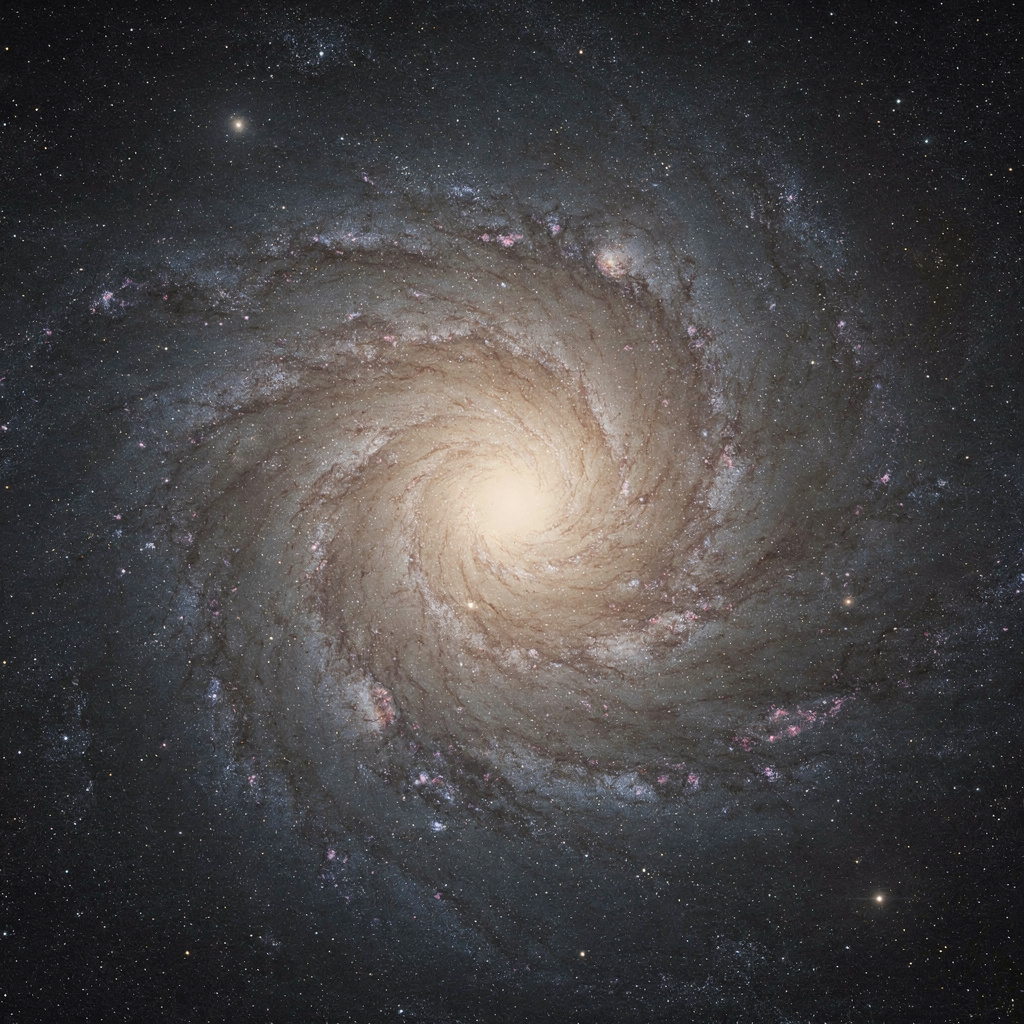 Spiral
Milky Way
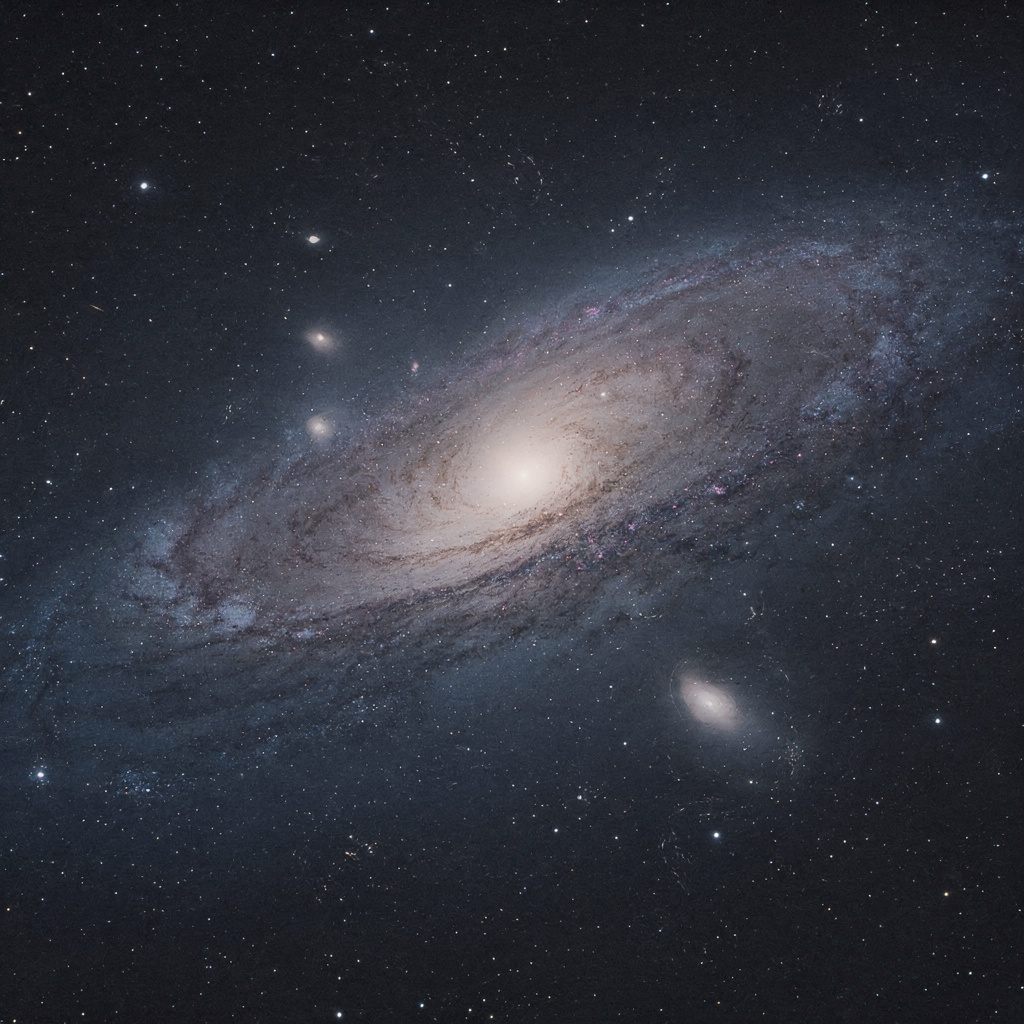 Spiral
Andromeda (M31)
 Spiral
Triangulum (M33)
 Lenticular
Sombrero (M104)
 Spiral
Whirlpool (M51)
 Elliptical
M87 (Virgo A)
 Elliptical
Centaurus A (NGC 5128)
 Irregular
Large Magellanic Cloud
Live Asteroid Tracker
Near-Earth objects monitored by NASA Planetary Defense
Powered by NASA NeoWs API · DEMO_KEY
Constellations
Ancient star patterns that guided explorers for thousands of years
Orion
7 main stars · Brightest: Rigel · Best seen in Winter
In Greek myth, Orion was a giant huntsman placed among the stars by Zeus. His three belt stars — Alnitak, Alnilam, Mintaka — are iconic worldwide.
Space Stations
From Salyut to the ISS — humanity's outposts in the cosmos
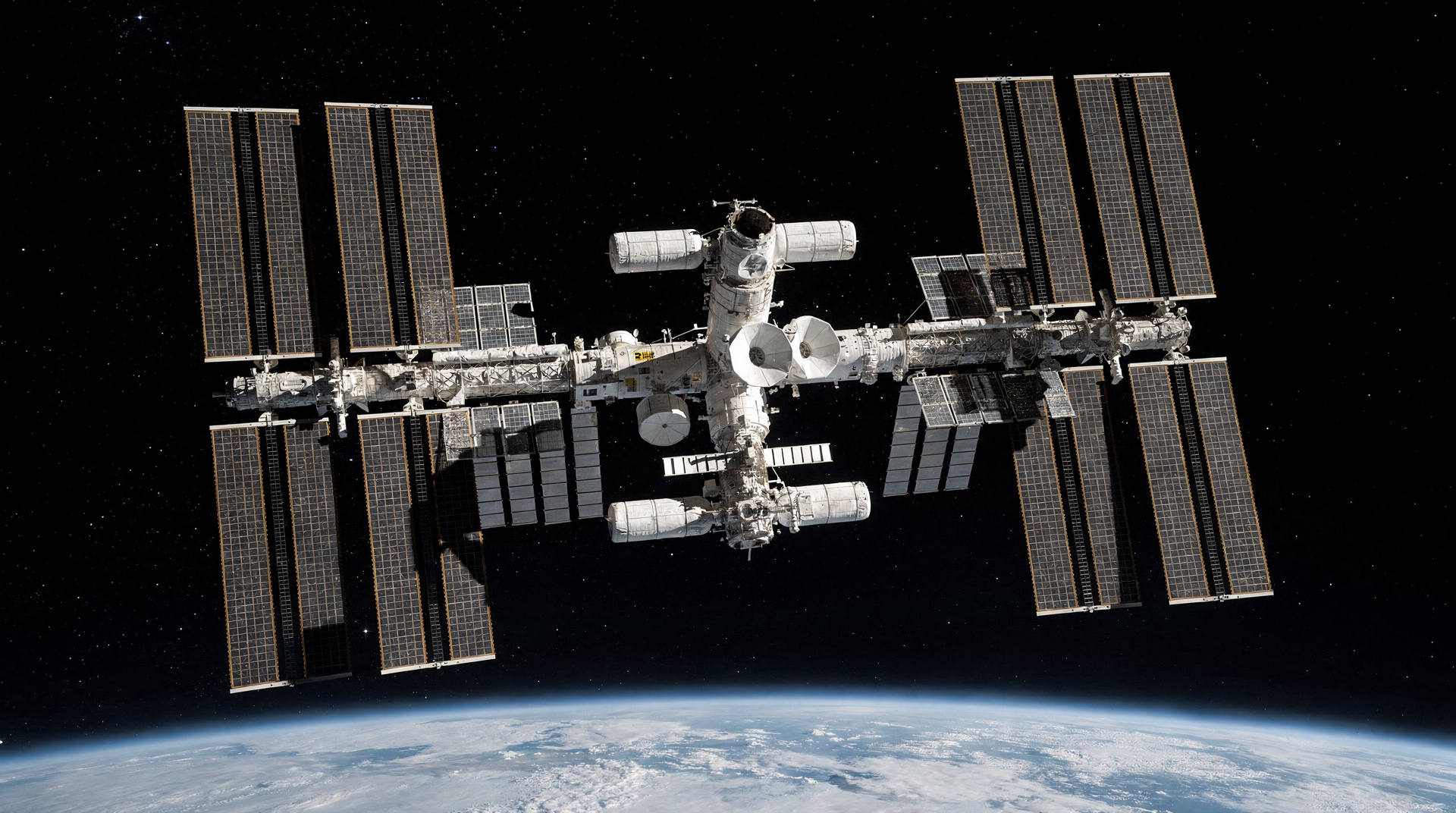
International Space Station
The ISS is a modular space station in low Earth orbit. A joint project among NASA, Roscosmos, ESA, JAXA, and CSA, it has been continuously inhabited since November 2, 2000. It serves as a microgravity and space environment research laboratory conducting experiments in biology, physics, astronomy, and meteorology.
🛩️ Docked Spacecraft
Astronomical Discoveries
Milestones that changed how humanity understands the cosmos
Calculated Earth's circumference within ~1% accuracy using shadow angles — the first scientific measurement of Earth.
Compiled the first comprehensive mathematical model of planetary motion, used for 1,400 years.
Published De Revolutionibus placing the Sun at the center, triggering the Scientific Revolution.
Observed a new star ('stella nova') proving the heavens were not unchanging as Aristotle claimed.
First systematic telescopic observations: lunar craters, Jupiter's moons, Saturn's rings, Venus phases.
Discovered Io, Europa, Ganymede, and Callisto — first objects found orbiting a body other than Earth.
Invented the reflective telescope design still used in most professional observatories today.
Principia Mathematica unified terrestrial and celestial mechanics — the foundation of classical physics.
First planet discovered with a telescope, doubling the known size of the solar system.
Predicted mathematically before observation, proving Newton's laws could guide discovery.
Unified space and time, showed mass and energy are equivalent. Transformed all of physics.
Redefined gravity as the curvature of spacetime. Predicted black holes, gravitational waves, and the Big Bang.
Galaxies are all moving apart — the universe is expanding, implying it originated from a single point.
Accidentally detected the afterglow of the Big Bang — the CMB — confirming the Big Bang theory. Nobel Prize 1978.
Revealed deep-field images of thousands of galaxies, confirmed accelerating expansion, and determined the universe's age.
Pulsar planets discovered orbiting PSR 1257+12. The first confirmed world beyond our solar system.
Supernovae observations showed the universe's expansion is speeding up, implying dark energy exists. Nobel Prize 2011.
GW150914 — two merging black holes 1.3 billion ly away confirmed Einstein's 100-year-old prediction. Nobel Prize 2017.
M87* — the 6.5 billion solar mass black hole — imaged for the first time. 2022: Sgr A* (our galaxy's center) imaged.
JWST released its first images — galaxies as they were 13.1 billion years ago, when the universe was only 700 million years old.
Education Mode
Deep-dive educational content on every aspect of astronomy and space science
Planets
The eight planets of our Solar System orbit the Sun at different distances, sizes, and compositions. They are divided into terrestrial (rocky) planets and gas/ice giants.
Mercury, Venus, Earth, and Mars are rocky worlds with solid surfaces. They formed in the inner solar system where temperatures were too high for ice to condense. Earth is the only one with confirmed life and liquid water oceans on its surface.
💡 Quick Facts
📚 Recommended Reading
Space Quiz
Challenge yourself across 4 categories of astronomy knowledge
How to Play
- ▸ 10 questions per game (or 5 for single category)
- ▸ 30 seconds per question — runs out? Question auto-skips
- ▸ Each correct answer earns 1 point + streak bonuses
- ▸ Explanations shown after every answer
- ▸ Your top 5 scores are saved locally
Astronomy Reports
Space weather, sky events calendar, planetary visibility, and observing tips
What is Space Weather?
Space weather refers to environmental conditions in space driven by the Sun's activity: solar flares, coronal mass ejections (CMEs), and the continuous solar wind. These can affect satellite operations, GPS accuracy, radio communications, and produce stunning auroras at high latitudes.